[protected]
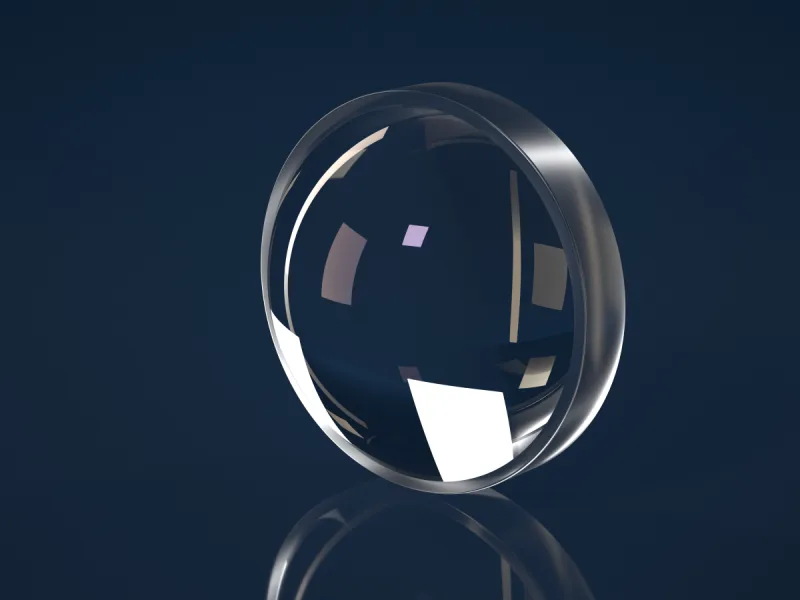
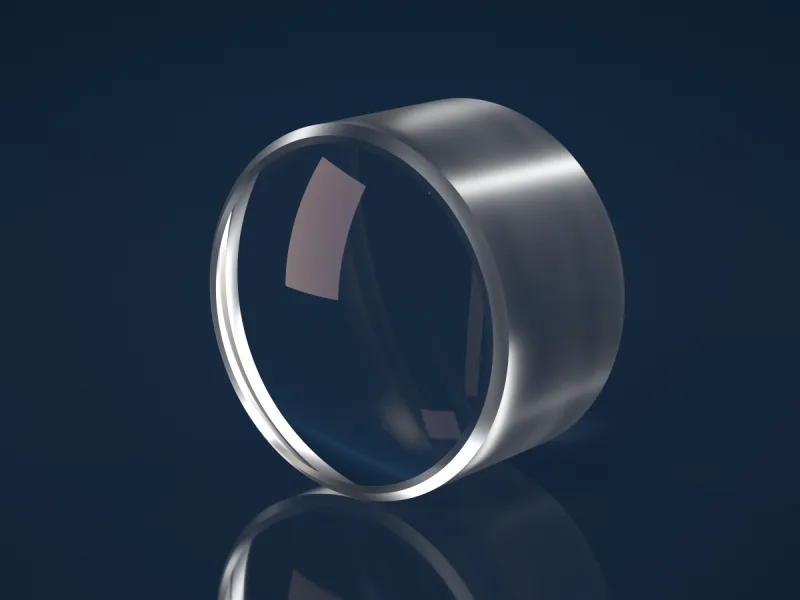
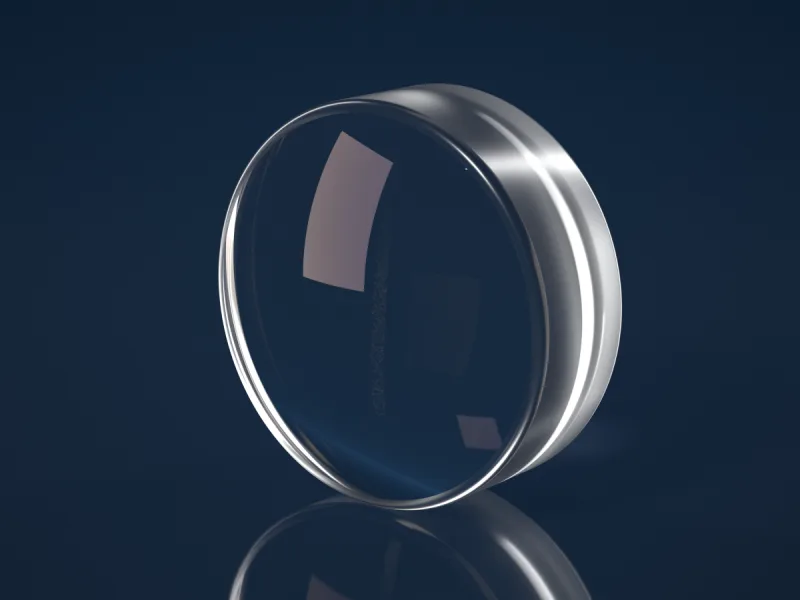
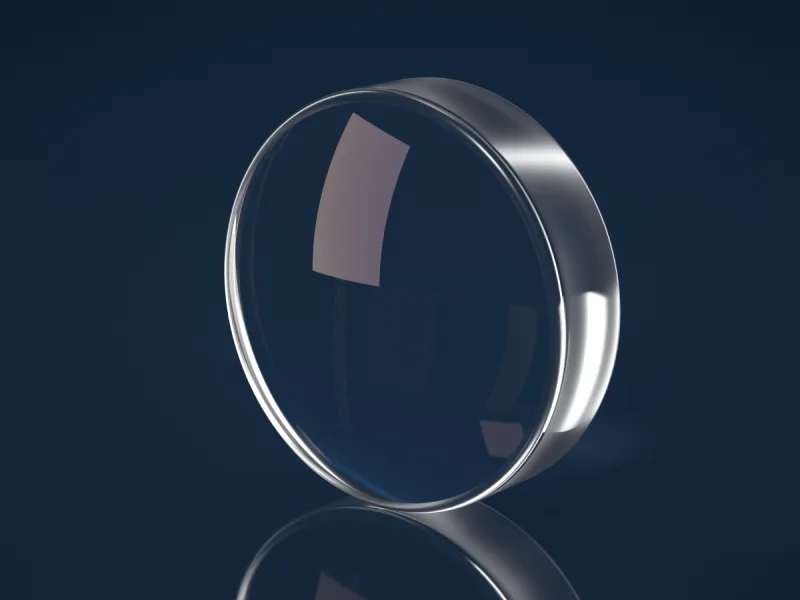
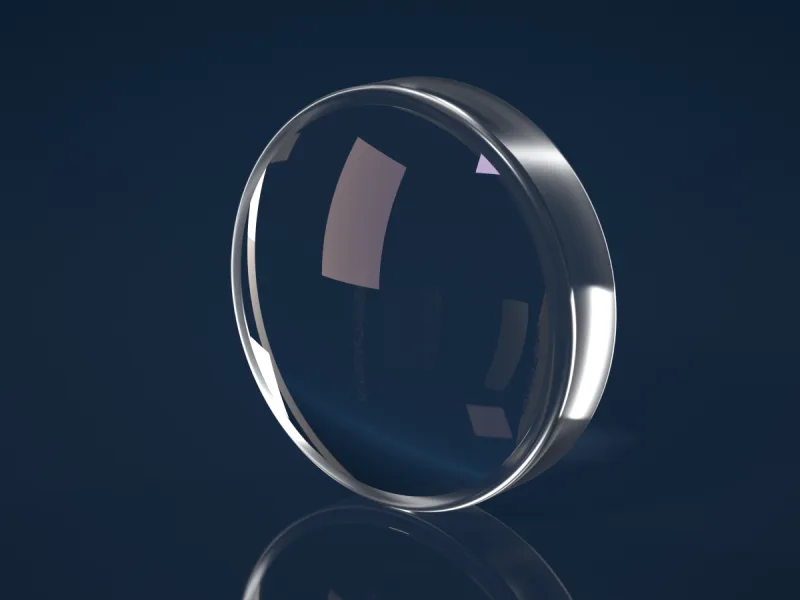
Ø15.00 mm Molded Glass Aspheric Collimating Lens, EFL 11.24 mm, NA 0.62, 587 nm 587 nm AL-D1500-F1124-W587
AL-D1500-F1124-W587 Model: A0038 · MOQ: 5 pcs

Ø15.00 mm Molded Glass Aspheric Collimating Lens, EFL 11.24 mm, NA 0.62, 587 nm

Physically the largest optic Aspherics molds as a standard part, this Ø15.00 mm asphere weighs in at 7.0 mm center thickness and gathers light at NA 0.62 - a condenser more than a conventional collimator, sized for emitters and small sources that must be captured whole. The 587 nm design wavelength sits beside the helium d-line at 587.6 nm, the classical reference for visible instrument correction, which makes the part equally at home condensing yellow-band sources and serving as a capture stage in broadband visible systems. Focal length is 11.24 mm with 6.83 mm working distance, windowless, plano rear face. The 0.3λ RMS wavefront grade states its role plainly: throughput and étendue, not fringe formation. Molding is what makes a 15 mm asphere at this NA economical in volume; grinding one would not be. Optimised at 587 nm, the lens takes BBAR broadband over 400–700 nm as its default and covers nearby lines like 561, 594, and 633 nm; narrowband (NBAR) or V-coat is quoted per wavelength.

DWL
587 nm
EFL
11.24 mm
NA
0.62
Lens OD
Ø15 mm
AR Coating Options

Coating applied to both surfaces unless single-side is specified at quote time. Custom NBAR centers must fall within 400-700 nm (this lens's substrate window). Laser damage threshold not specified for the standard line; request LDT-rated coating if required. Coating durability per MIL-PRF-13830B (humidity, adhesion, abrasion, eraser-rub).

Origin: Hong Kong Compliance: RoHS, REACH, ISO 10110, TSCA Compliant Packaging: Anti-static plastic tray and dust-free vacuum packaging

Key Engineering Features

  • Largest part in the standard line: Ø15.00 mm, CT 7.0 mm
  • NA 0.62 capture at EFL 11.24 mm
  • Designed at 587 nm, adjacent to the 587.6 nm helium d-line
  • Windowless; WD 6.83 mm; plano rear face
  • CDGM D-ZK3; RMS wavefront <0.3λ at 632.8 nm - condenser grade
  • AR per request: 400-700 nm broadband, VIO/GRN/RED narrowbands, or 587 nm V-coat

Typical Applications

  • High-capture condensing of visible emitters
  • Yellow-band and broadband visible illumination
  • Instrument condenser and projection stages
  • Test optics near the helium d-line

Complete Optical, Mechanical & ISO 10110 Specifications

Optical Specifications
Optical Function
Collimation
Design Wavelength
587 nm
Numerical Aperture
0.62
Effective Focal Length
11.24 ± 1% mm
Working Distance
6.83 ± 1% mm
Laser Window Material
-
Laser Window Thickness
-
Wavefront Aberration (RMS)
<0.3λ, @632.8 nm
Mechanical & Dimensions
Outer Diameter
15 +0.01/-0.05 mm
Left Asphere Range
14.0 mm
Edge Thickness
2.22 mm
Center Thickness
7.0 ± 0.1 mm
Working Distance
6.83 mm
Material & ISO 10110 Quality
Type
CDGM D-ZK3
Stress Birefringence
10 nm/cm
Bubbles and Inclusions
5 × 0.1 mm
Inhomogeneity and Striae
1;2
Key Specifications
Part Number
AL-D1500-F1124-W587
Optical Function
Collimation
OD
15.00 mm
EFL
11.24 mm
DWL
587 nm
NA
0.62
WD
6.83 mm
CT
7.0 mm
Left Surface (S1)
R
Asphere CX
Effective Aperture
13.5 mm
Chamfer
-
Surface Treatment and Coating
Per Request
Surface Form Tolerances
1.3 μm (P-V)
Centring Tolerances
2 arcmin (transmission)
Surface Imperfections
3 × 0.25 mm; L3 × 0.01 mm; E0.1 mm
Laser Damage Threshold
Not specified (ISO 10110-17 code: 6/-)
Right Surface (S2)
R
Plano
Effective Aperture
11.0 mm
Chamfer
C0.2 mm
Surface Treatment and Coating
Per Request
Surface Form Tolerances
1.3 μm (P-V)
Centring Tolerances
-
Surface Imperfections
3 × 0.25 mm; L3 × 0.01 mm; E0.1 mm
Laser Damage Threshold
Not specified (ISO 10110-17 code: 6/-)

Compatible Commercial Laser Sources (587 nm)

Condenser / high-capture lens, windowless. No standard single-mode diode exists at 587 nm.

Manufacturer Model / Series Package Mode Notes
(yellow DPSS / OPSL) — 589–594 nm module Module - nearest coherent yellow sources; near the 587.6 nm He d-line
(broadband / LED) — visible emitter - - suits condensing duty rather than a specific diode
Manufacturing & Verification Process
Precision Glass Molding, Wavelength-Matched AR Coating & Interferometry