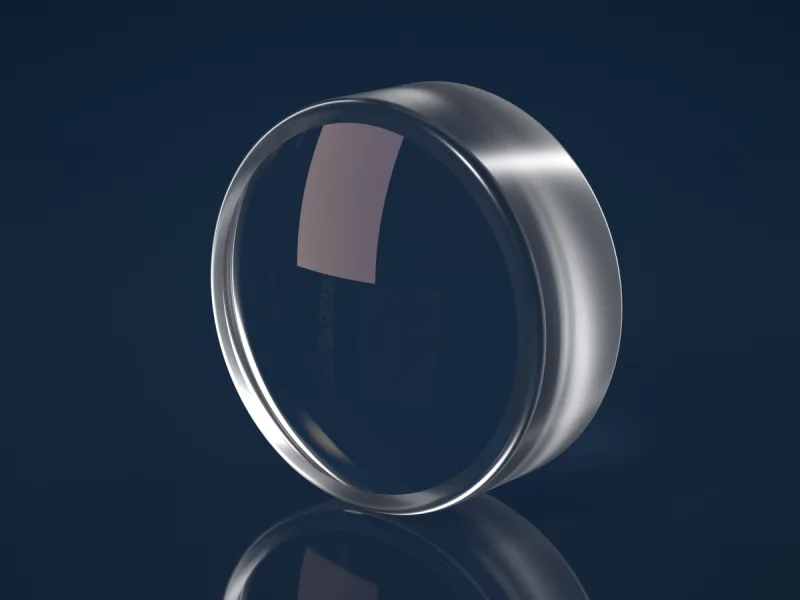
[protected]
Ø10.50 mm Molded Glass Aspheric Collimating Lens, EFL 15.26 mm, NA 0.3, 639 nm 639 nm AL-D1050-F1526-W639
AL-D1050-F1526-W639 Model: A0045 · MOQ: 5 pcs

Ø10.50 mm Molded Glass Aspheric Collimating Lens, EFL 15.26 mm, NA 0.3, 639 nm

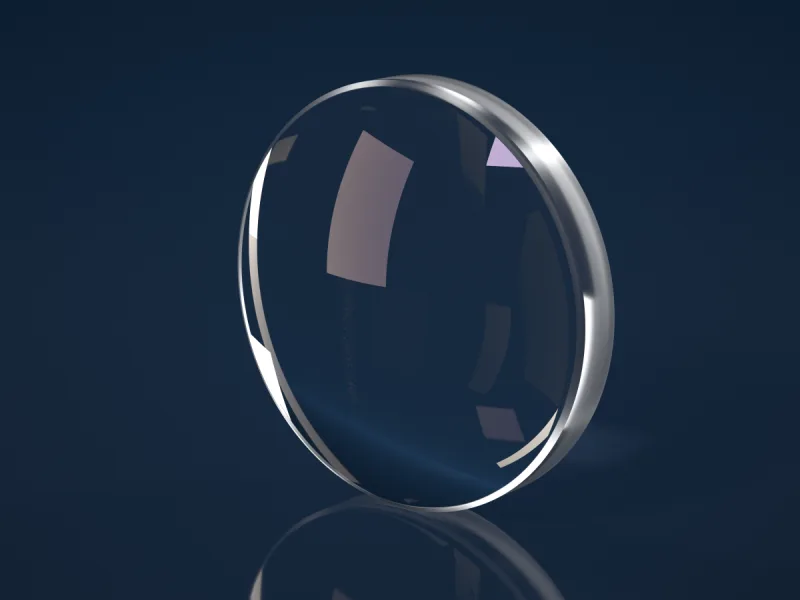
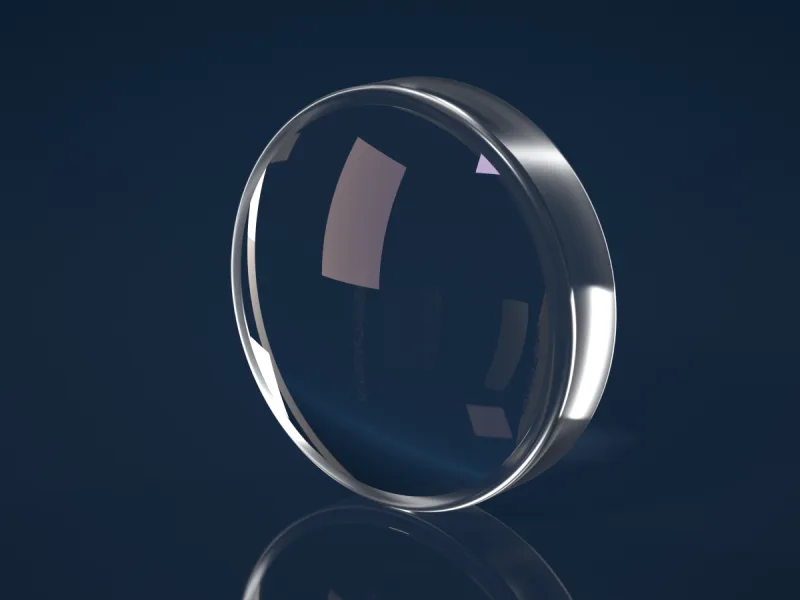
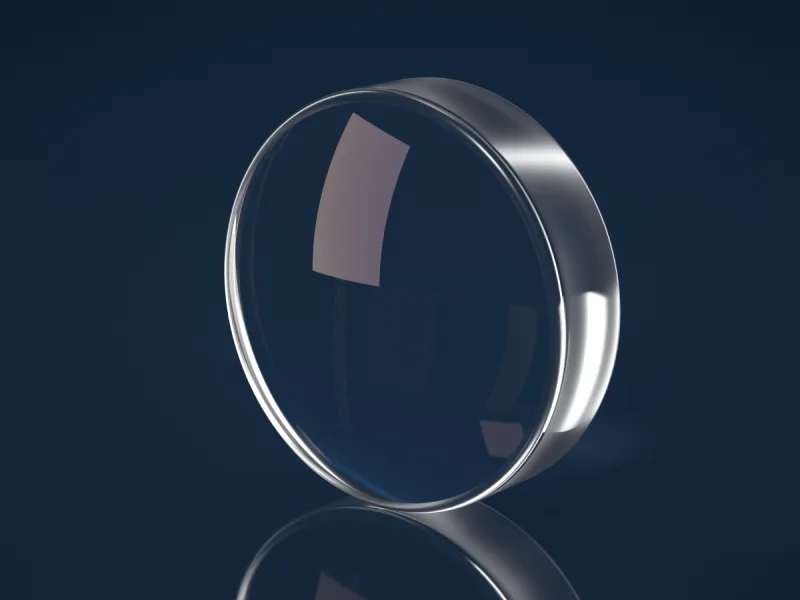
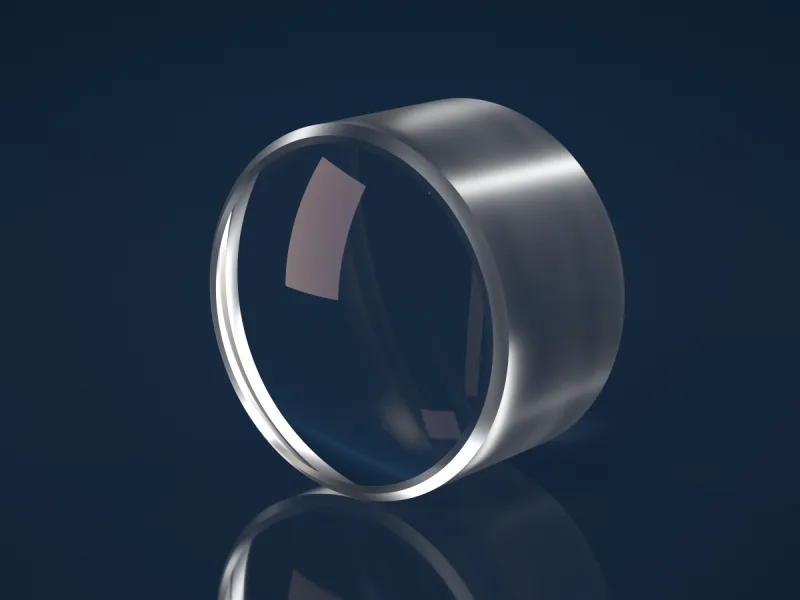
Higher-power red diodes at 639 nm come in larger cans with thicker windows and stronger thermal plumbing, and this collimator is scaled to meet them: Ø10.50 mm of aperture, a twin-asphere biconvex prescription at 15.26 mm focal length, and a design computed through the 0.30 mm N-BK7 window those packages wear. NA 0.30 collects the emitter at a 13.58 mm working distance that clears the deeper can geometry. The output - a red beam in the 9 mm class with wavefront under 0.05λ RMS at 632.8 nm - feeds display engines, show systems, and projection optics that would otherwise need an expander behind a smaller lens. OHARA L-BAL42 substrate at 3 mm center thickness. This is the only 639 nm part in the line and the largest of the visible collimators; its red siblings at 635 nm cover the smaller formats. The 400–700 nm BBAR window ships as the standard coating, making the same element usable at 633 and 635 nm as well as its optimised 639 nm point, with NBAR or V-coat available per line on request.

DWL
639 nm
EFL
15.26 mm
NA
0.3
Lens OD
Ø10.5 mm
AR Coating Options

Coating applied to both surfaces unless single-side is specified at quote time. Custom NBAR centers must fall within 400-700 nm (this lens's substrate window). Laser damage threshold not specified for the standard line; request LDT-rated coating if required. Coating durability per MIL-PRF-13830B (humidity, adhesion, abrasion, eraser-rub).

Origin: Hong Kong Compliance: RoHS, REACH, ISO 10110, TSCA Compliant Packaging: Anti-static plastic tray and dust-free vacuum packaging

Key Engineering Features

  • Ø10.50 mm aperture with NA 0.30 - sized for higher-power red emitters
  • Biconvex twin-asphere prescription, EFL 15.26 mm
  • Designed through a 0.30 mm N-BK7 window; WD 13.58 mm
  • RMS wavefront <0.05λ at 632.8 nm - Maréchal diffraction-limited
  • OHARA L-BAL42, CT 3 mm
  • AR per request: visible broadband, 620-670 nm narrowband, or 639 nm V-coat

Typical Applications

  • Collimating higher-power 639 nm diodes
  • Red illumination for display and show systems
  • Large-beam machine-vision projection
  • Biomedical red sources

Complete Optical, Mechanical & ISO 10110 Specifications

Optical Specifications
Optical Function
Collimation
Design Wavelength
639 nm
Numerical Aperture
0.3
Effective Focal Length
15.26 ± 1% mm
Working Distance
13.58 ± 1% mm
Laser Window Material
N-BK7
Laser Window Thickness
0.30 mm
Wavefront Aberration (RMS)
<0.05λ, @632.8 nm
Mechanical & Dimensions
Outer Diameter
10.5 +0/-0.02 mm
Edge Thickness
1.28 mm
Center Thickness
3 ± 0.02 mm
Working Distance
13.58 mm
Material & ISO 10110 Quality
Type
OHARA L-BAL42
Stress Birefringence
10 nm/cm
Bubbles and Inclusions
5 × 0.1 mm
Inhomogeneity and Striae
1;2
Key Specifications
Part Number
AL-D1050-F1526-W639
Optical Function
Collimation
OD
10.50 mm
EFL
15.26 mm
DWL
639 nm
NA
0.3
WD
13.58 mm
CT
3 mm
Left Surface (S1)
R
Asphere CX
Effective Aperture
9.0 mm
Chamfer
C0.15 mm
Surface Treatment and Coating
Per Request
Surface Form Tolerances
1.0 μm (P-V)
Centring Tolerances
2 arcmin (transmission)
Surface Imperfections
3 × 0.16 mm; L3 × 0.01 mm; E0.2 mm
Laser Damage Threshold
Not specified (ISO 10110-17 code: 6/-)
Right Surface (S2)
R
Asphere CX
Effective Aperture
8.4 mm
Chamfer
C0.15 mm
Surface Treatment and Coating
Per Request
Surface Form Tolerances
1.0 μm (P-V)
Centring Tolerances
-
Surface Imperfections
3 × 0.16 mm; L3 × 0.01 mm; E0.2 mm
Laser Damage Threshold
Not specified (ISO 10110-17 code: 6/-)

Compatible Commercial Laser Sources (639 nm)

Glass-window TO-56 / TO-9 (0.30 mm window — higher-power red cans).

Manufacturer Model / Series Package Mode Notes
Ushio JP HL63 red family (639 nm bin) TO-56 / TO-9 SM/MM -
Mitsubishi JP ML562G85 (638/639, 2 W) TO-9 MM higher-power orange-red
Shenzhen Raybow 瑞波光电 CN 638–650 single-emitter TO-9 / COS MM Chinese red chip fab
Manufacturing & Verification Process
Precision Glass Molding, Wavelength-Matched AR Coating & Interferometry